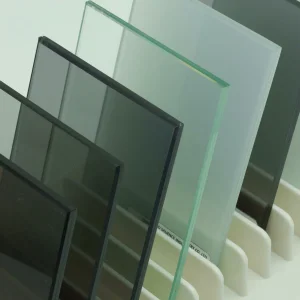
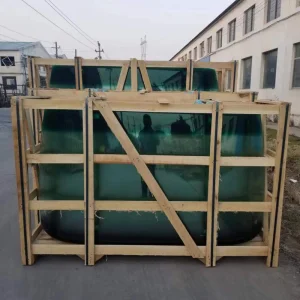
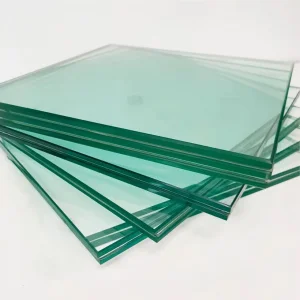
Infrared Cut (IR Cut) glass represents a critical intersection of material science and modern optoelectronics. As a premier China Infrared Cut Glass Manufacturer, AGS Glass has redefined the standards for spectral filtering. IR Cut glass is engineered to block unwanted infrared radiation while allowing visible light to pass, a property essential for high-fidelity imaging, ADAS (Advanced Driver Assistance Systems) cameras, and thermal management in electric vehicles.
We combine 30,000 sqm of manufacturing capacity with rigorous ISO/TS-16949 quality protocols. Our infrared filtering technology utilizes advanced thin-film deposition, ensuring high transmittance (T > 90%) in the visible spectrum while maintaining a sharp cut-off wavelength customized to specific project requirements.
The global demand for IR Cut glass is surging due to the proliferation of smart sensors. From autonomous vehicle cameras that require "clean" light data to surveillance systems relying on precise spectral filtering, AGS Glass stands at the forefront.
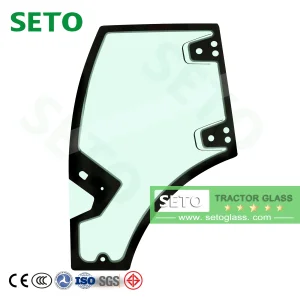
The technical roadmap at AGS Glass focuses on three pillars: Nano-Coating Precision, Durability, and Spectral Selectivity. We are currently developing ultra-durable IR-Cut coatings capable of withstanding extreme environmental conditions—crucial for agricultural and engineering vehicles operating in harsh terrain.
By leveraging 12 senior technicians and continuous investment in R&D, we are shifting from standard IR-Cut filters to spectrally selective solutions that actively manage heat loads inside the cabin, improving the energy efficiency of the next generation of EVs.
We understand that "China Factory" is not just about price—it's about reliability. Since 2015, our ISO-9001 and ISO/TS-16949 certifications prove our dedication to defect-free manufacturing. We offer localized support to ensure that every shipment meets international safety standards, backed by our promise of fast delivery and proactive after-sales service.
A: It acts as an optical filter. In imaging applications, it blocks infrared light to prevent chromatic aberration and color shifts, ensuring sensors "see" colors as the human eye does. In automotive, it rejects solar heat (IR radiation) to keep the interior cool.
A: Yes. We specialize in custom spectral engineering. Whether you need an 850nm or 940nm cut-off for security cameras, or broad-spectrum infrared rejection for thermal comfort, our technical team provides tailored thin-film solutions.
A: We adhere to global standards like CCC, DOT, and E-mark. Every batch undergoes strict spectral scanning and durability testing before export to ensure it meets the specific automotive or industrial requirements of your region.
 AGS Glass