Why is sunroof glass more expensive than normal glass? The difference is not simply size or appearance. A sunroof panel must fit a specific roof opening, follow its curved profile, and work with the vehicle’s moving hardware. It may also include tinting, coatings, reinforced edges, or laminated construction. These details can make replacement glass more costly than a standard side window.
Small details matter. A panel that looks correct on a workbench may still leak, rattle, or bind if its shape or mounting points are wrong. The final price can also reflect limited availability, vehicle-specific parts, labor, and checks for proper operation. In some vehicles, the glass is sold as part of a larger assembly, which changes the repair estimate.
A useful expert comment would help explain how these factors affect real repair costs. However, no article or verifiable expert quotation was provided, so I won’t invent a person’s name or attribute a made-up statement. The practical point remains: the price usually reflects more than the glass itself. Before approving a repair, ask whether the quote covers the panel alone, installation, seals, and any required adjustments. Check the exact part number, too. That simple step can prevent a costly mismatch.
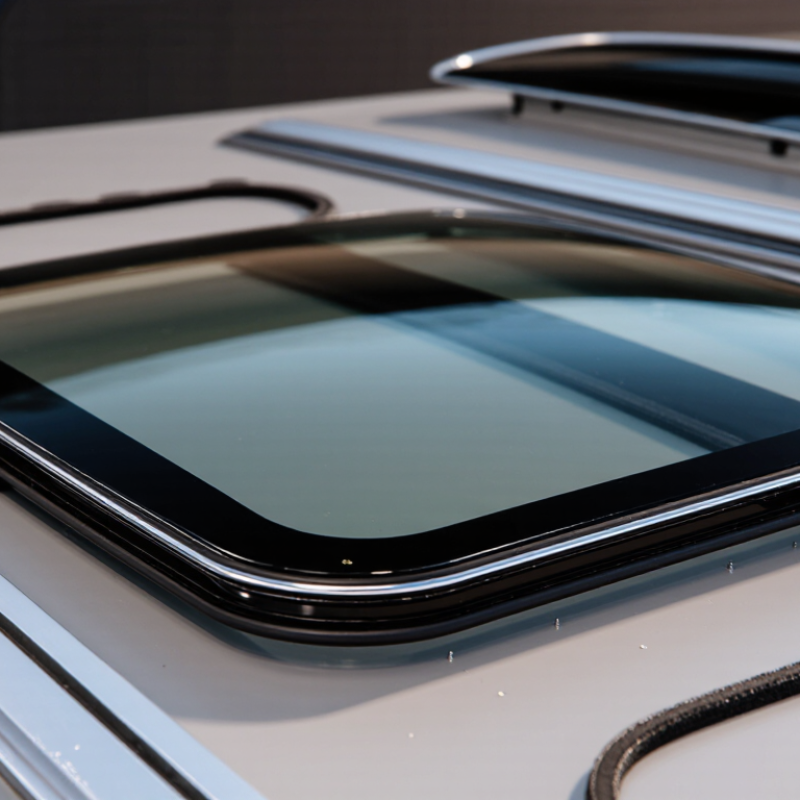
Sunroof glass is designed for a different job from ordinary side-window glass. It faces direct sunlight, rain, roof flex, and repeated opening and closing. Its shape may be more deeply curved, with carefully finished edges and a dark ceramic border that hides adhesive and helps control heat. Fit matters. Even a small mismatch can affect sealing, wind noise, or smooth movement.
The glass may be tempered or laminated, depending on the vehicle design. Tempered panels are heat-treated to break into small pieces; laminated panels hold fragments between plastic layers. In the United States, glazing materials are covered by NHTSA’s Federal Motor Vehicle Safety Standard No. 205. Grand View Research estimated the global automotive-glass market at about $25.84 billion in 2023, with projected growth of 6.6% annually from 2024 to 2030. That figure covers automotive glass broadly, not sunroofs alone, so it cannot explain any single replacement quote. Still, specialized curves, coatings, edge treatments, and tight sealing requirements help explain why a roof panel can cost more than a plain window. The less obvious cost is often the precise fit. I’d want to check the panel specification before comparing prices.
| Cost Factor | Typical Sunroof Glass | Typical Standard Vehicle Glass | Why It Affects Price |
|---|---|---|---|
| Glass construction | Most conventional sunroof panels use tempered safety glass. Some panoramic roof designs use laminated glass or multiple glass layers. | Door windows are commonly tempered; windshields are generally laminated, with a plastic interlayer between glass layers. | The required safety construction depends on the vehicle and roof design. Specialty or multi-layer panels can cost more to manufacture and source. |
| Shape and fit | Often curved or specially contoured to match the roof opening, seals, and moving panel assembly. | Many door-glass designs are flatter, while windshields are also shaped but are produced in larger, established replacement categories. | A vehicle-specific shape may require specialized tooling and a narrower supply of compatible replacement panels. |
| Tint and solar features | May include a dark tint, solar-control coating, or other features designed to reduce glare and heat entering through the roof. | Tint, acoustic layers, and solar-control features vary by window and vehicle specification. | A replacement must match the original specifications; added coatings or specialized layers can increase part cost. |
| Installation access | Work may involve removing interior trim, releasing seals, or adjusting the panel within the sunroof assembly. | Door-glass replacement may require removing a door trim panel; windshield replacement involves separate bonding and curing procedures. | Labor depends on vehicle design and the steps needed to protect trim, align the panel, and restore a proper seal. |
| Seals and adjustment | The panel must align with roof seals and, on opening systems, move correctly with the sunroof mechanism. | Door windows use channel seals and regulators; fixed glass uses its own mounting and sealing method. | Extra inspection or adjustment may be needed to prevent wind noise, water entry, or binding. Damaged mechanisms can add repair costs. |
| Parts availability | A panel may fit only a particular roof configuration, model year, or body style. | Common door-glass and windshield types may have more replacement options, although availability still varies by vehicle. | Fewer compatible suppliers or less common specifications can affect both price and delivery time. |
| Illustrative installed replacement range (U.S.) | Conventional sunroof glass panel: approximately $400–$1,200. Panoramic roof glass may be approximately $800–$2,500 or more. | Door glass: approximately $200–$600. Windshield replacement: approximately $300–$1,000 or more, depending on vehicle features. | These broad estimates vary by vehicle, location, part specification, and labor. Full roof-assembly repairs, additional damage, and windshield camera recalibration may cost extra. |
Note: Sunroof glass is not automatically more expensive in every case. Request a vehicle-specific quote and confirm whether it covers the glass panel only, seals, labor, and any adjustment or calibration.
It faces direct sunlight, rain, roof flex, and repeated movement. Its curves and edges must match the roof opening closely. Fit matters.
It may need a precise curve, special coatings, finished edges, and careful sealing. A small mismatch can cause wind noise or leaks. Price alone may not explain everything.
No. Depending on the vehicle design, it may be tempered or laminated. The panel specification determines which type fits.
Tempered glass is heat-treated to strengthen it. If it breaks, it typically forms small pieces. Not all panels use this construction.
Plastic layers hold glass fragments together if the panel breaks. Its construction differs from a single tempered sheet.
A ceramic border can hide adhesive and help manage heat. It also forms part of the panel’s finished appearance.
A flat sheet is cut, its edges are ground, and it is heated and rapidly cooled. Coatings or a dark border may be added. Small defects matter.
Check the original shape, thickness, tint, curvature, and mounting details. These can vary between vehicles, and a quote may not show every cost factor. I might be missing something.
Why is sunroof glass more expensive than normal glass? The answer lies in its specialized design. Unlike standard vehicle windows, sunroof glass must fit a roof opening, work with a moving or tilting mechanism, and withstand exposure to sunlight, weather, and changing temperatures. Its shape, thickness, coatings, and manufacturing process may therefore require more precise engineering and quality checks.
The final replacement cost can also depend on the vehicle’s roof design and whether the correct glass is readily available. Some installations require careful removal of interior trim, adjustment of the sunroof mechanism, sealing, and leak testing. These additional labor and service steps can raise the total bill beyond the price of the glass itself. Understanding these factors helps explain why sunroof replacement costs vary from one vehicle to another.

 AGS Glass