Top Tips for Choosing Auto Glass for Commercial Vehicles

Time:2026-10-18 Author:Amelia
0%

Choosing the right glass for a commercial vehicle involves more than comparing prices. Fleet vans, buses, trucks, and delivery vehicles face different pressures every day. A windscreen may endure gravel, temperature changes, vibration, and constant road exposure.

The practical question is simple: How to choose auto glass for commercial vehicles? Start with the vehicle’s exact make, model, year, and body configuration. Small differences can affect fit, camera placement, sealing, and visibility. John Nielsen, a former AAA automotive engineering and repair expert, highlights the priority clearly: “Visibility, correct fit, and installation quality should guide every choice.”

That advice deserves attention.

Check whether the glass meets the vehicle manufacturer’s specifications. Consider acoustic glass for driver comfort, solar control glass for long routes, and laminated glass for added protection. If the vehicle uses rain sensors, heads-up displays, or ADAS cameras, replacement may require precise calibration. A clean-looking installation is not enough.

Ask about the technician’s commercial fleet experience. Confirm the adhesive, curing time, warranty, and mobile service process. Downtime costs money. Poor sealing can also lead to wind noise, water leaks, or interior damage.

The cheapest option may appear attractive. It can become expensive later.

There is no perfect glass choice for every fleet. I would still question any supplier who promises one universal solution. Reliable decisions balance safety, compatibility, durability, operating conditions, and total ownership cost. Before approving the work, inspect the edges, seals, clarity, and camera alignment in natural daylight.
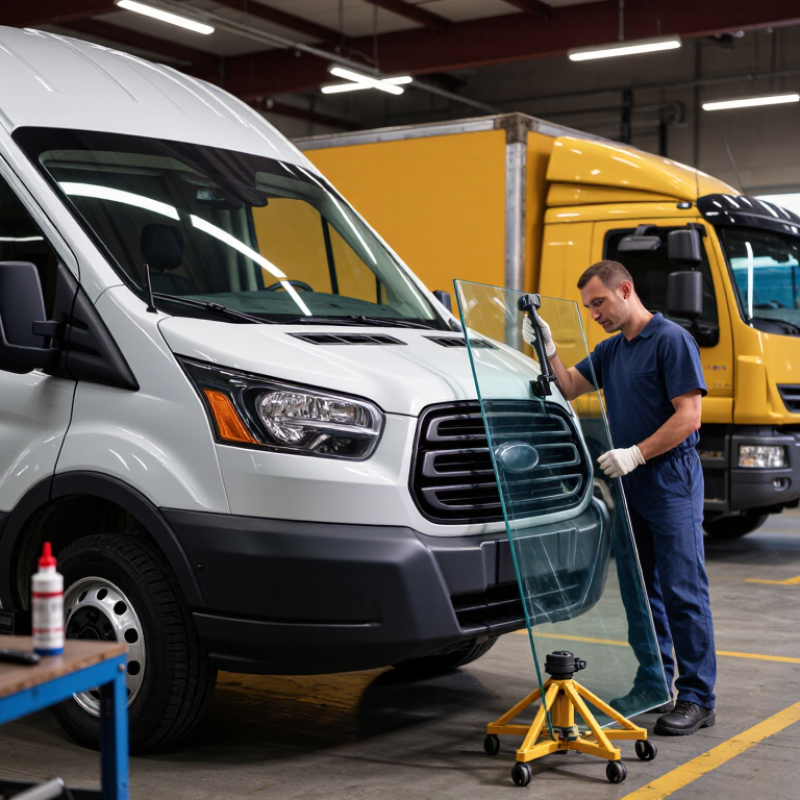
Top Tips for Choosing Auto Glass for Commercial Vehicles

Assess Fleet Needs: Vehicle Class, Load Use, and FMVSS 205 Compliance

Choosing auto glass for a commercial fleet starts with the vehicle’s actual working conditions, not a catalog description. A delivery van, heavy truck, and passenger shuttle face different demands. Their glass must match body structure, driver sightlines, door movement, and expected road exposure. Fleet managers should record each vehicle class, daily routes, average mileage, and replacement history. Small details matter.

Load use deserves equal attention. A vehicle carrying dense tools may experience different vibration than one transporting lightweight parcels. Frequent loading can also increase the risk of scratches, impacts, or blocked rear visibility. Side glass, rear glass, and windshields should be reviewed separately. One specification rarely fits every position. It sounds convenient, but it can create costly mistakes.

FMVSS 205 compliance must be verified through the glass marking, supplier documentation, and installation records. The standard addresses glazing materials, light transmission, and required markings for applicable vehicle positions. A qualified installer should confirm the correct glazing designation before fitting the part. Do not rely only on size or appearance. Fitment is not compliance.

Real fleet inspections often reveal an overlooked issue: the original glass may have been replaced incorrectly years ago. That possibility deserves attention. Compare the proposed glass with vehicle records, operating conditions, and maintenance risks. When uncertainty remains, ask a certified technician or compliance professional to review the selection. A clear decision trail supports safer maintenance and more reliable fleet planning.

Select Laminated or Tempered Glass Under ANSI/SAE Z26.1 Safety Standards

For commercial vehicles, glass selection should begin with ANSI/SAE Z26.1, not price. This standard evaluates impact resistance, fragmentation, strength, abrasion, and light transmission. FMVSS No. 205 incorporates these requirements in the United States. Check the permanent compliance marking before installation.

Laminated glass usually suits windshields and some side windows. Its plastic interlayer helps hold broken pieces together after impact. That supports visibility and reduces the chance of loose shards entering the cab.

Tempered glass breaks into smaller, blunt-edged pieces. It often suits side or rear openings where rapid release may support emergency access. However, tempered glass offers less post-breakage retention. The vehicle layout matters.

NHTSA’s 2022 Traffic Safety Facts recorded 42,514 roadway deaths. Its occupant-protection data also found that 22% of passenger-vehicle occupants killed were totally ejected, and 83% of those occupants died. These figures do not measure glazing alone. They do show why containment deserves attention.

Fleet managers should match glass type to opening location, driver sightlines, rollover exposure, and replacement frequency. Inspectors should also check fit, seals, edge damage, and camera calibration.

A perfect choice does not exist. Cost-only decisions can age badly. A small installation gap may create wind noise, leaks, or stress cracks months later. Select certified glass, trained installation, and documented inspection records.

Verify ADAS Compatibility and Require Post-Installation Camera Calibration

Top Tips for Choosing Auto Glass for Commercial Vehicles

When selecting auto glass for a commercial vehicle, check ADAS compatibility before approving the installation. The replacement glass must match the vehicle’s specifications, camera mount, tint, curvature, and optical clarity. A small difference near the camera can distort lane markings or traffic signs. Small errors matter. Ask the installer to confirm the correct glass by vehicle identification details, not appearance alone. A near match may still be unsuitable.

Post-installation camera calibration is essential when the windshield holds a forward-facing camera. The technician should inspect the mounting bracket, remove protective film, and scan for system faults. Calibration may require accurate targets, controlled lighting, and a level workshop floor. Some systems also need a road test after static calibration. Do not guess. Request written records showing the calibration method, equipment condition, and final results.

Commercial fleets should also consider scheduling, technician training, and repeatability across vehicles. A rushed installation can leave hidden alignment problems, especially when multiple trucks use different configurations. The process is not always perfect; weather, tire pressure, suspension height, or an uneven floor may affect results. A careful technician should identify these issues instead of forcing a pass. Drivers should report warning lights, unexpected braking, or lane alerts after collection. Early feedback can prevent a minor glass issue from becoming a costly operational problem.

Compare Glass Durability Using OEM Specifications and ASTM Impact Testing

Choosing auto glass for a commercial vehicle requires more than checking its price or appearance. OEM specifications provide a reliable starting point. They identify required thickness, curvature, laminate structure, optical quality, and edge dimensions. These details affect windshield fit, driver visibility, cabin noise, and structural support.

ASTM impact testing adds practical evidence. The test exposes glass to controlled impacts from specified materials, heights, and temperatures. Review the test method, impact energy, and breakage results, not only the certification label. A windshield that resists a laboratory strike may still perform differently after months of vibration, heat, and road debris. Real conditions are less tidy.

I have seen fleet operators choose thicker glass, assuming it always offers better protection. That assumption was too simple. Excess weight can affect installation accuracy and may conflict with the vehicle’s original design. Check whether the replacement matches the vehicle’s OEM dimensions and mounting requirements. Inspect the glass under angled light for distortion, bubbles, or uneven edges. Small defects can become distracting during long shifts.

Ask suppliers for test reports, production traceability, and installation guidance. Confirm that sensors, cameras, heating elements, and brackets align correctly. ASTM results support comparison, but they do not replace professional fitting or routine inspection. Even experienced teams can miss a minor mismatch. That deserves a second look.

Evaluate Total Cost Through Warranty Terms, Service Life, and Downtime Data

Choosing auto glass for a commercial vehicle requires more than comparing invoice prices. Warranty terms can reveal the real financial risk. Check coverage for optical distortion, leaks, stress cracks, installation defects, and recalibration-related issues. Confirm who pays for labor, mobile service, and repeat visits.

Service life should come from records, not optimistic claims. Track replacement dates, mileage, road conditions, and damage locations across each vehicle. A glass option lasting 30 months may cost less than one lasting 18 months, even with a higher purchase price. The assumption is simple. Reality is messier.

Downtime deserves a clear calculation. The American Transportation Research Institute reported an average marginal trucking cost of 2.27 dollars per mile in its 2023 Operational Costs of Trucking report. Apply that benchmark to average daily mileage, then add driver scheduling costs and missed delivery penalties. For example, 450 idle miles represent about 1,021.50 dollars before secondary losses. Your fleet data may differ.

Ask the installer to document glass specifications, curing time, inspection results, and any required camera calibration. AGRSS 004-2022 emphasizes controlled replacement practices and technician accountability. Keep those records with the vehicle. A cheap replacement that creates distortion or delays dispatch is not cheap. I would also review warranty claims quarterly. Some patterns only appear after winter exposure, vibration, or repeated door slams. That part is easy to overlook.

FAQS

How should a fleet assess its auto glass needs?

Review vehicle class, daily routes, mileage, load type, and replacement history. Small details matter. A delivery van differs from a heavy truck.

Does cargo affect glass selection?

Yes. Dense tools can create stronger vibration than lightweight parcels. Frequent loading may cause scratches, impacts, or blocked rear visibility.

Should every glass position use the same specification?

No. Review windshields, side glass, and rear glass separately. One specification sounds convenient, but it may cause costly mistakes.

How can a fleet verify FMVSS 205 compliance?

Check permanent glass markings, supplier documents, and installation records. Confirm the correct glazing designation before fitting. Size alone proves nothing.

When is laminated glass usually suitable?

Laminated glass commonly suits windshields and some side windows. Its interlayer holds broken pieces together and can support continued visibility.

When might tempered glass be appropriate?

Tempered glass often suits side or rear openings. It breaks into smaller pieces and may support quicker emergency release. Post-breakage retention is lower.

What should be checked before replacing glass near a forward-facing camera?

Confirm the correct curvature, tint, optical clarity, and camera mount. A small optical difference can distort lane markings or traffic signs.

Is camera calibration required after windshield installation?

It is essential when the windshield supports a forward-facing camera. Check the bracket, remove protective film, scan system faults, and document calibration results.

What installation problems should fleet managers watch for?

Inspect seals, edges, fit, leaks, wind noise, stress cracks, and camera alignment. Uneven floors, tire pressure, or weather can affect calibration.

What should drivers report after collecting a vehicle?

Report warning lights, unexpected braking, or unusual lane alerts. A near match may look fine. That assumption deserves review.

Conclusion

Choosing the right glass is an important part of managing safe, efficient commercial vehicles. How to choose auto glass for commercial vehicles begins with assessing each vehicle’s class, cargo use, operating environment, and compliance with FMVSS 205. Fleet managers should select laminated or tempered glass according to the vehicle’s safety requirements and ANSI/SAE Z26.1 standards. Laminated glass may support occupant protection and reduce shattering, while tempered glass can suit specific locations where required.

Compatibility with advanced driver-assistance systems is also essential. If cameras or sensors are mounted near the windshield, installation should include proper post-installation calibration. To compare durability, review OEM specifications and available ASTM impact-test information rather than relying only on price. Finally, evaluate total cost by considering warranty coverage, expected service life, replacement frequency, and vehicle downtime. A well-planned choice can improve safety, reduce operational interruptions, and provide better long-term value for the entire fleet.

Amelia

Amelia

Amelia is a seasoned marketing professional with a wealth of expertise in our company’s core offerings. With an unwavering passion for driving growth and innovation, she plays a pivotal role in shaping our marketing strategies and enhancing brand visibility. A key aspect of her responsibilities......