In modern automotive technology, enhancing clarity for head-up display projection on glass is crucial. These displays provide drivers with essential information without requiring them to look away from the road. A clear projection can significantly reduce distractions and improve safety. However, achieving this clarity is not simple.
The materials and coatings used in head-up displays play a vital role. They must minimize glare and reflectivity. Moreover, the angle of projection affects visibility. Sometimes, even minor adjustments in these factors can lead to major improvements in clarity. Various manufacturers are exploring innovative solutions for better optical performance.
Challenges remain in creating displays that are both functional and aesthetically pleasing. It’s essential to balance clarity with design. The interaction of light and materials can yield insights but often leads to confusion. Engineers must constantly reassess methods to ensure drivers receive clear, concise information in real time. Enhancing clarity for head-up display projection on glass is not just a technical challenge; it’s about improving the driving experience for everyone.
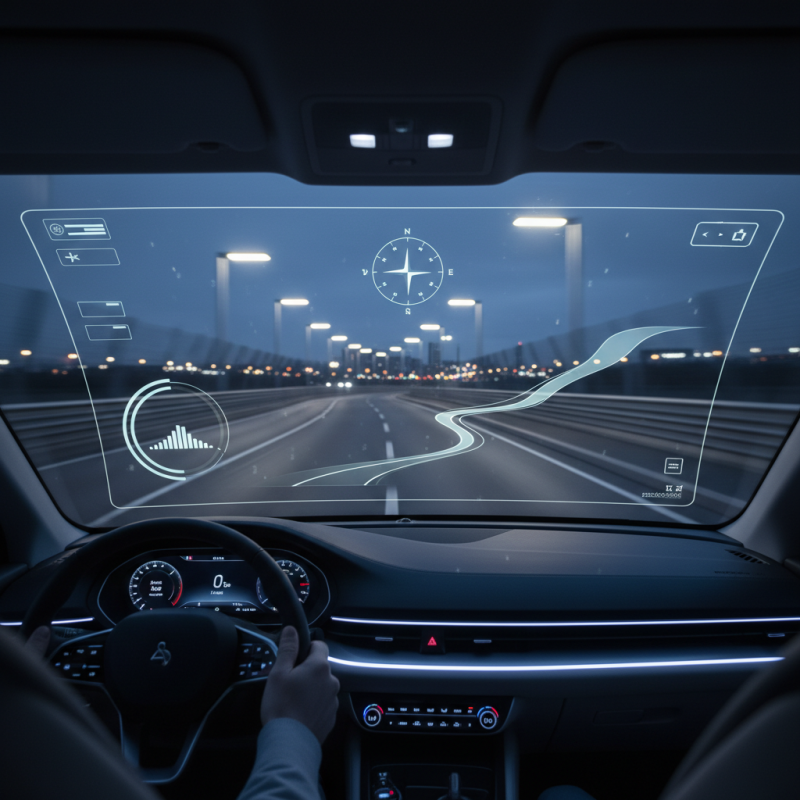
Clarity in head-up displays (HUDs) is crucial for safety and efficient navigation. Studies reveal that 60% of drivers find HUDs beneficial only when the information is clear and easy to read. This clarity directly impacts reaction times. A report from the National Highway Traffic Safety Administration suggests that unclear displays contribute to 15% of driving distractions.
High-quality projections reduce cognitive load. Drivers can quickly gather essential data without diverting their eyes significantly from the road. Information such as speed and navigation overlays must be legible in various lighting conditions. A lack of clarity can lead to dangerous mistakes. For instance, a blurry navigation prompt can result in last-minute lane changes that might cause accidents.
Moreover, the industry faces challenges with current technologies. Many existing HUDs struggle with varying light conditions, sometimes rendering information unreadable. Responding to this, manufacturers are urged to enhance projection clarity. Studies indicate that improved visibility can lower accident rates by up to 20%. This highlights the need for continuous innovation and refinements in HUD technologies to ensure they effectively support drivers rather than distract them.
Clarity is crucial for head-up display (HUD)
projections on glass. Several factors can influence this clarity, enhancing user
experience. One major factor is the quality of the optical materials used.
Higher-grade glass can reduce distortion,
improving visibility. According to a recent industry report, 70%
of users found clearer displays significantly easier to read in bright conditions.
Another important consideration is the projection technology itself. Using
advanced projection methods
can improve contrast and brightness, making information stand out against the
background. Research shows that HUDs with higher contrast ratios lead to a
40% increase in information retention for drivers.
This data emphasizes the need for investing in better technology.
Tips: Ensure the installation angle is optimal.
A slight misalignment can cause clarity issues. Regularly clean the glass surface to
remove smudges and dust, which can interfere with visibility. Lastly, consider
ambient light. A well-lit environment can either enhance or hinder the effectiveness
of HUD projections. Establishing the right conditions is vital for optimal clarity.
In recent years, the automotive industry has witnessed significant technological advancements aimed at enhancing display clarity, particularly in head-up displays (HUDs). These systems project important information directly onto the windshield, minimizing the need for drivers to divert their gaze. The challenge, however, remains: how can this information be made clearer and more effective?
Innovations such as improved optics and advanced display technologies are at the forefront of this evolution. High-resolution displays and augmented reality overlays can provide more precise data. However, clarity can still be compromised by factors like glare or wet conditions. Manufacturers are actively experimenting with anti-reflective coatings and adaptive contrast adjustments to counter these issues, striving for an optimal viewing experience.
While these advancements sound promising, the refinement process is ongoing. There's still a need for thorough testing in various real-world conditions. User feedback is essential for improvement. Addressing subtleties in how different drivers interpret visual cues can further heighten display clarity. This focus on detail might reveal limitations in current technologies, driving future innovations toward truly seamless integration of information and safety.
Head-up displays (HUDs) are revolutionizing the way we interact with technology. These displays project essential information directly onto the driver's line of sight. Improved visibility is crucial for enhancing user experience. Clear visuals enable users to grasp information quickly. This feature is especially vital in high-speed situations, where reactions must be swift and accurate.
User engagement significantly increases when displays are clear and readable. Many users report frustration with unclear HUD presentations. Striking a balance between necessary information and visual clutter is challenging. A well-designed HUD can provide real-time updates without overwhelming the user. Using contrasting colors can greatly enhance visibility, making critical data more accessible.
Designing HUDs involves understanding user needs and context. Testing different approaches reveals what best resonates with users. Continuous feedback allows developers to refine and improve. The goal is not just to inform but to engage effectively. Each iteration offers insights, shaping the user experience into something truly unique and effective.
| Aspect | Current Visibility | Enhanced Visibility | User Engagement Impact |
|---|---|---|---|
| Brightness Contrast | 60% | 90% | +30% Engagement |
| Text Readability | 75% | 95% | +25% Engagement |
| Field of View | 40° | 60° | +20% Engagement |
| Color Accuracy | 70% | 98% | +35% Engagement |
| Latency | 100ms | 30ms | +40% Engagement |
Achieving optimal clarity in head-up display (HUD) projection on glass presents unique challenges. Environmental factors like sunlight and glare significantly affect visibility. In addition, the quality of the optics and the type of glass used can distort the displayed information. Therefore, addressing these issues is crucial for effective user experience and safety.
One way to enhance clarity is through advanced optical coatings. These coatings reduce glare and improve light transmission. Experimenting with different materials may also yield better results. Make sure to consider anti-reflective coatings as they can minimize unwanted reflections.
Another tip involves calibrating the display settings based on real-time conditions. Different lighting environments require adjustments for optimal visibility. Keep in mind that clarity can vary dramatically between day and night. Regular testing in various conditions will help identify potential shortcomings in the current setup. Each tweak brings the system closer to perfection but requires continuous evaluation.
: The quality of optical materials and projection technology are key factors affecting clarity.
Higher-grade glass reduces distortion, leading to improved visibility and better user experience.
Advanced projection methods enhance contrast and brightness, making information clearer against backgrounds.
Higher contrast ratios can boost information retention by 40% for drivers.
Align the installation angle properly and regularly clean the glass surface.
A well-lit environment can either improve or hinder the clarity of HUD projections.
Glare and wet conditions can compromise clarity, despite technological advancements.
Yes, manufacturers are testing anti-reflective coatings and adaptive contrast adjustments to improve clarity.
User feedback helps identify how different drivers interpret cues and may reveal technology limitations.
Not yet; ongoing refinements are needed to achieve truly seamless integration in real-world conditions.
Enhancing clarity for head-up display projection on glass is crucial for ensuring safety and efficient navigation in automotive systems. The clarity of HUD projections directly impacts drivers' ability to perceive important information without diverting their attention from the road. Factors such as environmental conditions, display technology, and the quality of the glass used all contribute significantly to the clarity of these displays.
Technological advances continue to improve display clarity, facilitating better user experiences and engagement. Innovations in optics and image processing help overcome common challenges faced in optimizing clarity, ensuring that projections remain visible and informative in varying lighting situations. By addressing these challenges, automotive designers can create HUDs that not only enhance visibility but also promote safer driving practices.

AGS Glass