How to clean auto glass without scratching it starts with one small decision: keep grit away from the glass. A dry paper towel can drag road dust across a windshield and leave fine marks. Use clean microfiber towels instead, and set aside one for washing and another for drying. The difference is easy to see under streetlights.
Automotive-glass care specialist Jordan Lee offers this practical reminder: “Treat every speck of grit like sandpaper; lift it away before you wipe.” Work in the shade, where cleaner will not dry into cloudy streaks. Rinse visible dirt first, then use an automotive glass cleaner and light, overlapping strokes. Avoid spraying cleaner onto hot glass. It may flash-dry before you can wipe it evenly.
Small habits matter. Fold the towel often, so a dirty section never meets the glass again. Clean the inside, too; a thin film can catch sunlight and blur your view. If a stubborn spot remains, pause and inspect it rather than scrubbing harder. That restraint is easy to forget when you are in a hurry. It is also where careful cleaning can go wrong.
This guide explains which tools help, how to clean each surface, and what to avoid. The goal is clear glass, not aggressive polishing. Check your towels before every pass. One trapped grain can undo the whole job.
Auto glass is not one uniform sheet. A windshield usually has two glass layers bonded around a plastic interlayer, while side and rear windows are commonly made from tempered glass. These differences affect how damage appears and how repairs are handled. A shallow mark on a windshield may be a surface scratch, but a chip can reach deeper layers and needs professional assessment.
Many scratches begin with grit. Dust and fine sand caught beneath a dry cloth or wiper blade can drag across the glass, leaving thin arcs or cloudy patches. Worn blades may also carry hard particles across the windshield. Ice scrapers, rough paper towels, and abrasive cleaning pads are other common culprits. Small marks can be hard to see until sunlight hits at a low angle. That matters.
Not every cloudy spot is a scratch. Mineral deposits from dried water can look similar, and residue may come off with suitable glass cleaner and a clean microfiber cloth. A cautious inspection helps, though it can still be difficult to tell the difference by sight alone. I would not assume a mark is harmless if it catches a fingernail or sits directly in the driver’s view. Scrubbing harder can make things worse.
Understand auto glass and common causes of scratches
Quartz, a common component of sand and road grit, is harder than typical soda-lime auto glass and can scratch it when dragged across the surface. Rinse off loose dirt before wiping, use a clean microfiber cloth, and replace worn wiper blades. Mohs hardness is a relative scale; it does not measure scratch risk by itself.
Use two clean, lint-free microfiber cloths: one for washing and one for drying. The Federal Highway Administration’s Highway Design Handbook for Older Drivers notes that roughly 90% of driving information is visual. Clear glass matters. A soft cloth also helps keep trapped grit from dragging across the surface. Shake it out before use; a tiny grain can still leave a fine scratch.
Choose a glass cleaner labeled for automotive glass, and check that it is safe for any window tint. For a simple alternative, use clean water with a small amount of mild soap, then rinse and dry promptly. The U.S. Geological Survey explains that calcium and magnesium cause water hardness; mineral-rich water can leave spots as it dries. I sometimes miss the narrow strip along the dashboard, so lower the windows slightly to clean their top edges. Avoid paper towels, scouring pads, and household cleaners with abrasive additives. Keep the cloth separate from the one used on tires or bodywork. Not every “soft” cloth stays clean.
Dust is tiny, but it can leave fine scratches when trapped beneath a cloth. Before cleaning auto glass, look for grit, dried mud, pollen, and small leaves along the edges. Work in the shade if possible; hot glass can dry water too quickly and leave marks. A quick glance helps. It is easy to miss the sandy line at the bottom of a window.
Rinse exterior glass gently with clean water, allowing loose particles to run off rather than rubbing them around. For debris stuck near seals, lift it away with a soft, clean brush. Use light strokes, and do not press the bristles against the glass.
Inside the car, a clean, dry microfiber cloth can pick up loose dust with minimal pressure. Shake it out away from the vehicle before using it again. Never use a cloth that has touched the ground.
Avoid switching on dry wipers to clear dust; grit can drag beneath the blades. I sometimes want to move straight to wiping, especially when the glass only looks lightly dusty. That shortcut is not worth the risk. If particles remain, rinse or lift them away first, then use a fresh cloth for the actual cleaning.
How to Clean Auto Glass Without Scratching It
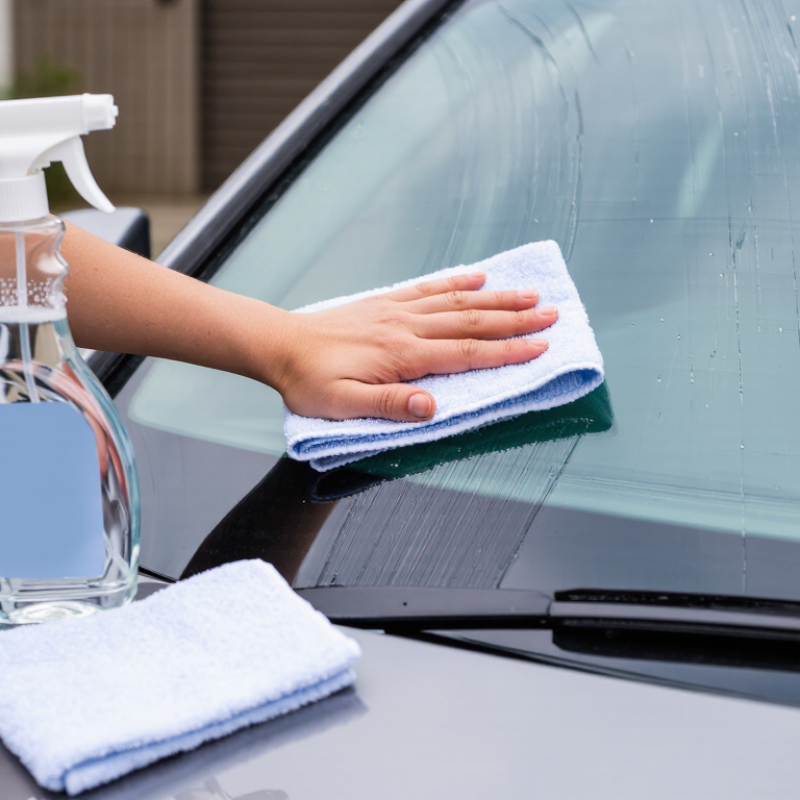
Start with cool glass and a clean, soft microfiber cloth. Dust and grit can act like fine sandpaper, so lift loose debris before wiping. Apply glass cleaner to the cloth rather than directly onto the window, especially near dashboard edges. Work on a small section at a time. Use gentle, overlapping strokes, moving from the top down so you can see which areas are clean. Let each pass overlap the last by about an inch. Light pressure is enough. If the cloth drags or leaves streaks, pause and check it for trapped grit.
Tips: Keep one cloth for applying cleaner and a second, dry cloth for buffing. Fold each cloth into quarters, then switch to a clean side as it picks up dirt. Use light pressure. Check the corners.
For a windshield, clean the inside and outside separately; a faint haze can be difficult to locate otherwise. Change direction between sides, such as vertical strokes inside and horizontal strokes outside. This makes missed streaks easier to spot. Avoid wiping with a paper towel or a cloth that has been used on dusty trim. I’ve found that rushing the last few inches near the edges often leaves smudges, so slow down there. If a mark remains, don’t scrub harder. Recheck the surface and use a clean cloth with another light pass.
| Step | Task | Recommended Materials | Technique | Why It Helps Prevent Scratches |
|---|---|---|---|---|
| 1 | Work on cool glass in a shaded area. | Shade or a cool, dry working area | Wait until the glass is cool to the touch before applying cleaner. | Cleaner is less likely to dry too quickly and leave residue that requires extra rubbing. |
| 2 | Remove loose dust and grit. | Clean water and a gentle rinse | Rinse visible dirt from the glass before wiping it with a cloth. | Loose particles can be dragged across the surface and cause fine scratches. |
| 3 | Choose a suitable cleaner. | Automotive glass cleaner; ammonia-free cleaner for tinted windows | Check the product directions and the vehicle’s window-care guidance before use. | A compatible cleaner helps avoid damage to window tint and nearby interior materials. |
| 4 | Use a clean, soft cloth. | Clean microfiber cloths | Keep separate cloths for applying cleaner and drying the glass; replace a cloth if it becomes dirty. | Soft, clean fabric reduces the chance of rubbing trapped grit over the glass. |
| 5 | Clean with gentle, overlapping strokes. | Microfiber cloth and glass cleaner | Wipe in straight vertical or horizontal passes, overlapping each pass slightly. Use light pressure rather than scrubbing. | Consistent strokes cover the glass evenly while minimizing friction and missed areas. |
| 6 | Dry and check the surface. | A second clean, dry microfiber cloth | Buff gently with straight strokes, then inspect the glass from different angles for streaks or remaining particles. | A clean drying cloth removes residue without reintroducing dirt from the cleaning cloth. |
| 7 | Avoid abrasive tools and excessive pressure. | No scouring pads, abrasive powders, or gritty cloths | Do not scrape or scrub ordinary dirt from the glass; rinse and repeat with a clean cloth if needed. | Abrasive materials and embedded grit can scratch the glass surface. |
Drying is not just the last step; it reveals what washing may have left behind. Move the vehicle out of direct sunlight, where water can evaporate too quickly and leave mineral spots. Use a clean, soft microfiber towel reserved for glass. Press lightly and dry in straight, overlapping passes. Avoid rubbing hard over a speck of grit. It can drag across the surface.
Then inspect the glass from different angles. Look across the windshield with daylight behind it, and check the corners and lower edge for haze or streaks. Turn your head slightly; a mark that disappears head-on may show from the side. Look closely. If you find residue, use a fresh section of cloth rather than spreading it around. For stubborn film, apply a small amount of glass cleaner to the towel, not directly onto nearby trim, and wipe gently. Dry the area again with another clean cloth.
I sometimes think a window is finished until low sunlight catches a faint arc near the wiper path. That is a useful reminder: clean-looking glass indoors can still hide residue. If the cloth picks up visible dirt, stop and rewash that section instead of continuing to buff. A little patience here helps protect the surface and keeps the view clear.
Use two clean, lint-free microfiber cloths: one for washing and one for drying. Keep them separate from cloths used on tires or bodywork.
Choose a cleaner labeled for automotive glass and safe for your window tint. Clean water with a little mild soap also works; rinse and dry promptly.
Yes. Rinse exterior glass gently, or lift debris near seals with a soft, clean brush. Inside, use a dry microfiber cloth with light pressure. Don’t wipe grit around.
Shake out your cloth and check for trapped grit. Never use a cloth that has touched the ground. Even a tiny grain can leave a fine scratch.
Work on small areas with gentle, overlapping strokes, moving from top to bottom. Fold the cloth into quarters and switch to a clean side as it gets dirty.
Clean the inside and outside separately. Try vertical strokes inside and horizontal strokes outside to make missed streaks easier to spot.
Lower the windows slightly to reach their top edges. Slow down near corners; I sometimes rush those last few inches and leave smudges.
Check the cloth for dirt and use a clean one for another light pass. Don’t scrub harder. Hot glass can dry too quickly, so work in the shade when possible.
How to clean auto glass without scratching starts with understanding what can damage the surface. Fine dust, grit, and debris may act like abrasives when dragged across the glass, while rough cloths or unsuitable cleaning products can leave marks or residue. Choose clean, soft materials and a product suitable for automotive glass, and make sure your wiping cloth is free of particles before you begin.
First, remove loose dust and debris gently rather than rubbing them into the glass. Apply the cleaner as directed, then wipe with light pressure using smooth, overlapping strokes. Avoid using rough or dirty materials, and replace or refold the cloth if it collects grit. When the glass is clean, dry it with a fresh, soft cloth and inspect it from different angles. If you notice streaks or residue, gently wipe the area again with a clean section of cloth.

AGS Glass