In the quest to enhance sealing performance between glass and vehicle body, manufacturers face several challenges. Achieving a perfect seal is crucial for vehicle integrity. Water leaks and noise intrusion can arise from inadequately sealed joints.
Different materials and techniques are available to tackle this issue. Adhesives, for instance, play a significant role in forming tight bonds. However, selecting the right adhesive is not always straightforward. Environmental factors and material compatibility must be considered. Testing various combinations can lead to unexpected results.
Experimentation in the field reveals areas for improvement. Simple fixes may not solve complex sealing problems. Minor adjustments in application methods can yield significant benefits. Attention to detail is essential in this process. Miscalculations can undermine efforts to promote durability and longevity. As the industry moves forward, it must prioritize innovative solutions to enhance sealing performance.
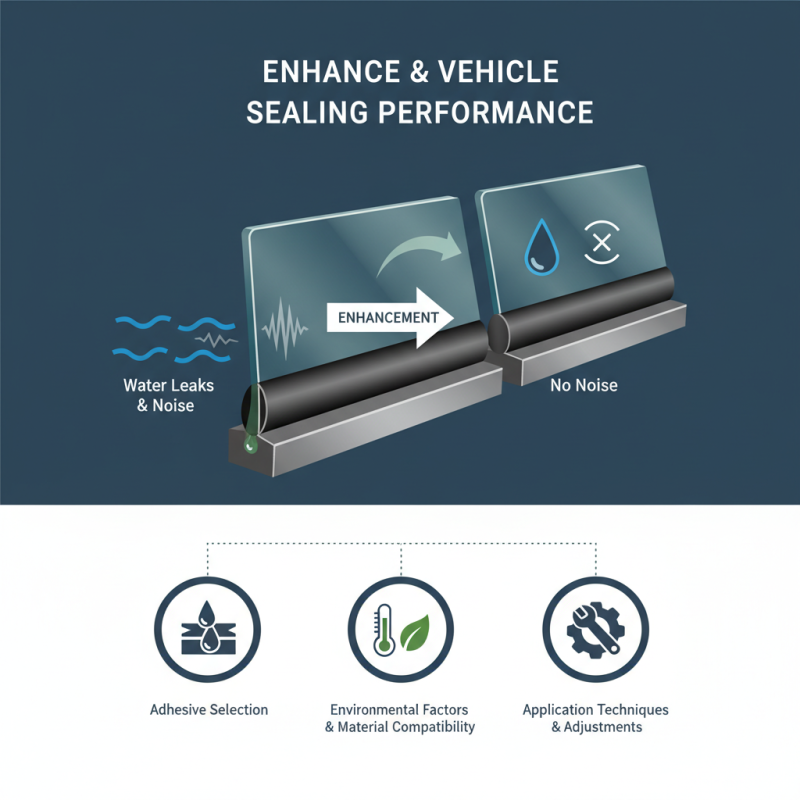
The performance of vehicle sealing systems is crucial for overall efficiency. Innovative materials are changing the game in this area. Advances in polymers and composites offer better protection against moisture and contaminants. These materials can provide a tighter seal, reducing noise and enhancing comfort.
New sealing technologies aim to tackle issues like expansion and contraction due to temperature changes. There is a need to examine how these materials hold up over time. While some options resist wear well, others may degrade faster than expected. Testing durability under various conditions could reveal weaknesses.
Developments in environmentally friendly materials also present interesting choices. Bio-based sealants can reduce environmental impact. However, their long-term performance remains uncertain. Researchers must prioritize sustainability while ensuring strong sealing capabilities. The challenge lies in striking the balance between performance and eco-friendliness in vehicle sealing systems.
This chart represents the effectiveness of different innovative materials used to improve vehicle sealing performance in 2026.
In the automotive industry, sealing efficiency plays a critical role. Effective seals prevent fluid leaks, enhance durability, and improve overall vehicle performance. According to a recent industry report, over 25% of vehicle-related failures can be attributed to sealing issues. This highlights the necessity of robust sealing strategies.
Design strategies should focus on material selection and geometry. Advanced materials, such as thermoplastic elastomers, show great promise. These materials provide excellent resilience and temperature resistance. In many cases, they can withstand extreme conditions without losing their sealing capabilities. Additionally, innovative design techniques can lead to significant improvements. For instance, integrating multidimensional seals can enhance the sealing surface area. This ensures tighter fits and reduces the chances of leakage.
However, not all strategies have proven effective under real-world conditions. Some designs appear optimal on paper but fail during testing. For example, the use of flexible seals can create pressure points that are prone to wear over time. Engineers must continuously evaluate and refine their methods. Incorporating feedback from field testing can lead to more reliable sealing solutions.
Testing the sealing performance of vehicles is crucial. It ensures vehicles remain safe and functional. Key methods include water ingress tests and air leak tests. These tests simulate real-world conditions, helping identify weaknesses.
Water ingress tests involve applying high-pressure water jets. The goal is to check for leaks in joints and seams. Inspecting these areas helps address potential issues. However, this method can miss hidden leaks. Regular re-evaluation is necessary for accuracy.
Air leak tests use pressurized air to detect leaks. They highlight problematic seals in cabins and engine compartments. Observing the pressure changes indicates where leaks might occur. Yet, many testers overlook the benefits of ambient conditions. Testing should happen in varying temperatures for better results. Evaluating these methods helps improve sealing performance for vehicles.
Maintaining vehicle seals is crucial for performance. Regular inspections help identify wear and tear. Look for signs of cracking or deformation. Even minor damage can lead to significant leaks. Ignoring these issues may compromise safety and efficiency.
Cleaning seals should be part of routine upkeep. Use mild soap and water for basic cleaning. Avoid harsh chemicals that may degrade materials. Applying lubricant occasionally can enhance flexibility. This practice often gets overlooked, but it can prolong seal life significantly.
Temperature extremes can impact seal integrity. Parking indoors during harsh weather can help. It’s a simple step that many dismiss. Regular rotation of vehicles also minimizes static wear. Consider the environment as you maintain your vehicle seals. Every detail counts toward longevity.
| Method | Description | Frequency | Expected Lifespan Increase (%) |
|---|---|---|---|
| Regular Inspection | Check for wear, damage, or contamination of seals | Every 6 months | 20% |
| Proper Lubrication | Use compatible lubricants to reduce friction | After every oil change | 25% |
| Seal Replacement | Replace worn or damaged seals promptly | As needed | 30% |
| Cleaning and Maintenance | Regularly clean the sealing surfaces and the seals themselves | Monthly | 15% |
| Environmental Protection | Use protective covers during extreme conditions | As necessary | 10% |
Sealing technology is evolving rapidly, driven by the automotive industry's quest for improved performance. As vehicles become more complex, the need for advanced sealing solutions grows. In fact, a recent report from the Automotive Sealing Systems Market noted that the market size is projected to reach $12 billion by 2026. This highlights a strong trend towards enhanced sealing materials. These materials must withstand extreme temperatures and pressures while ensuring durability and reliability.
A focus on innovative materials is key. For example, thermoplastic elastomers (TPEs) offer flexibility and resistance to environmental factors. Data indicates that the use of TPEs in automotive seals can improve longevity by 30%. However, not all manufacturers are fully utilizing these materials, leading to performance gaps and potential failures.
Tips: Consider lightweight seals. They can reduce energy consumption without compromising quality. Regular testing is crucial. Check seals frequently for wear and tear. Small issues can escalate quickly. Emphasizing quality control will enhance long-term performance. As the industry progresses, integrating smart sealing technologies, like sensors that detect failures, will be vital. These advancements may guide the future of sealing technology.
: It ensures vehicles are safe and functional, identifying weaknesses in sealing.
High-pressure water jets are applied to check for leaks in joints and seams.
This method can miss hidden leaks, requiring regular re-evaluation for accuracy.
Pressurized air detects leaks, indicating problematic seals in cabins and engine compartments.
Many testers overlook varying temperatures, which can improve testing results significantly.
Regular inspections for wear, cleaning with mild soap, and applying lubricant are crucial.
Exposure can lead to damage; parking indoors can help protect seals.
Innovative materials like thermoplastic elastomers and smart technologies will drive improvements.
They can reduce energy consumption while maintaining quality.
Small issues can escalate, and frequent checks help maintain performance and longevity.
The article "2026 Best Methods to Enhance Sealing Performance for Vehicles" explores various strategies aimed at improving the integrity and efficiency of vehicle seals. It highlights innovative materials that provide superior durability and adaptability for automotive sealing applications. Additionally, the article discusses design strategies that focus on optimizing the fit and function of seals, specifically to enhance sealing performance between glass and vehicle body, ensuring minimal water and air ingress.
Moreover, effective testing methods for sealing performance are outlined, emphasizing the importance of rigorous assessments in real-world conditions. Maintenance practices are also addressed, providing insights on how to prolong the lifespan of vehicle seals through proper care and routine inspections. Finally, the article looks ahead to future trends in sealing technology that promise further advancements in automotive performance, reinforcing the critical role of effective sealing in vehicle design and safety.
AGS Glass