Auto glass can fail suddenly, even when the impact seems insignificant. A tiny stone may create a star-shaped chip, while hidden stress spreads through the glass during temperature changes, vibration, or body movement. This raises an important question: Why does auto glass break even from small impacts?
The answer begins with laminated construction. A windshield contains two glass layers bonded around a plastic interlayer. The outer layer may absorb a small strike, but existing damage can weaken the surrounding area. Sharp temperature differences make this worse. For example, cold glass exposed to hot defroster air can expand unevenly. The crack may then travel across the driver’s sightline within minutes.
Bob Beranek, an auto-glass industry consultant and author, has stated, “The windshield is not just a piece of glass; it is a structural component of the vehicle.” That point matters when comparing China’s top 10 auto glass suppliers. Quality depends on more than clear visibility. It includes accurate curvature, edge strength, optical consistency, and reliable bonding surfaces.
The U.S. National Highway Traffic Safety Administration references FMVSS No. 205 and No. 212 for glazing performance and windshield retention. The Insurance Institute for Highway Safety also emphasizes the windshield’s role in occupant protection and roof-crush performance. These standards do not make glass unbreakable. They establish controlled safety expectations.
Still, supplier comparisons require caution. Certification alone cannot reveal every production weakness. A poorly fitted windshield may whistle, leak, or separate during a crash. Small details matter. That is why this guide examines leading Chinese manufacturers through product quality, testing capability, OEM experience, export performance, and after-sales reliability.
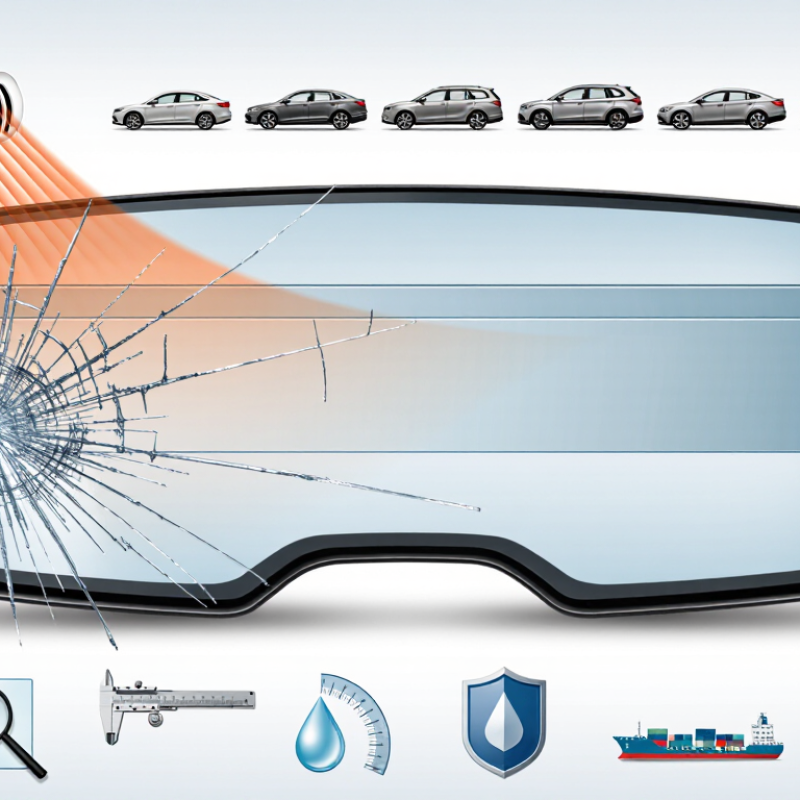
Auto glass is not ordinary window glass. The windshield usually uses laminated glass, with two glass layers bonded around a plastic interlayer. During a collision, this structure helps control shattered fragments and supports the passenger compartment. Side and rear windows are commonly tempered, breaking into small granules instead of long, sharp pieces. Glass also carries visual information. A clean windshield helps drivers judge distance, road markings, rain, and oncoming lights. Even a small distortion near eye level can cause fatigue. It matters every mile.
Breakage rarely comes from one dramatic event. A stone can create a tiny chip, then heat, cold, vibration, or body flex can extend it overnight. Parking a cold vehicle in strong sunlight may increase stress across damaged glass. Poor installation can matter too; uneven adhesive contact or incorrect fitting may create pressure points. Practical inspections should check the chip’s depth, edge location, crack direction, and surrounding frame. Not every mark needs the same response. That is easy to oversimplify. A short crack may look harmless, but its position can matter more than its length. A qualified technician should assess visibility, structural role, and sensor alignment before choosing repair or replacement.
| No. | Auto Glass Area | Common Glass Type | Typical Construction | Main Safety Function | Why It May Break | Important Quality Check |
|---|---|---|---|---|---|---|
| 1 | Windshield | Laminated safety glass | Two glass plies bonded with a plastic interlayer, commonly PVB | Maintains occupant retention, supports roof structure, and helps preserve forward visibility after impact | Stone impact, temperature stress, edge damage, body flexing, or an existing chip that develops into a crack | Optical distortion, correct curvature, proper bonding, crack resistance, and accurate sensor opening |
| 2 | Front Door Glass | Tempered safety glass | Heat-treated single glass pane | Provides side visibility, weather protection, and resistance to normal use | Localized impact, deep scratches, installation stress, or damage near the edge | Fragmentation pattern, thickness, dimensions, surface condition, and smooth operation in the regulator |
| 3 | Rear Door Glass | Tempered safety glass | Heat-treated glass designed to break into small granular fragments | Reduces injury risk from large sharp shards during side impacts | Mechanical impact, thermal shock, hidden edge chips, or residual manufacturing stress | Fragment size, break pattern, edge quality, tint consistency, and fit within the door frame |
| 4 | Backlite | Tempered or laminated safety glass | Single tempered pane or laminated assembly, often with printed conductive lines | Provides rear visibility, weather sealing, and resistance to aerodynamic loads | Impact from cargo or debris, thermal gradients, body movement, or stress around mounted hardware | Heater-line continuity, defroster performance, curvature, adhesive area, and water tightness |
| 5 | Quarter Glass | Tempered or laminated glass | Fixed glass panel bonded or retained in the body structure | Improves rearward visibility and contributes to cabin sealing | Side impact, body torsion, edge pressure, or incorrect installation tolerances | Correct shape, edge finish, tint, mounting position, and absence of contact with the body |
| 6 | Panoramic Roof Glass | Tempered or laminated safety glass | Large curved panel, sometimes combined with tint, coating, or a multi-panel design | Provides light and visibility while forming part of the vehicle enclosure | Hail, falling objects, rapid temperature change, mounting stress, or torsional body movement | Uniform curvature, coating durability, panel alignment, sealing, and resistance to thermal shock |
| 7 | Acoustic Auto Glass | Acoustic laminated glass | Laminated glass using a noise-reducing interlayer | Reduces selected road, wind, and powertrain noise entering the cabin | The same impact, edge, thermal, and installation stresses that affect standard laminated glass | Acoustic performance, interlayer integrity, optical quality, and correct installation orientation |
| 8 | Heat-Reflective Glass | Coated laminated or tempered glass | Glass with an infrared-reflective or solar-control coating | Helps limit solar heat entering the cabin and can reduce air-conditioning demand | Impact damage, coating scratches, thermal stress, or incompatible cleaning and installation methods | Solar-control performance, coating uniformity, visible light transmission, and compatibility with vehicle sensors |
| 9 | HUD-Compatible Windshield | Specialized laminated glass | Laminated construction with controlled optical properties for head-up display projection | Maintains a clear projected image while retaining windshield safety functions | Impact, incorrect replacement, optical mismatch, or stress caused by poor bonding | Double-image control, optical distortion, curvature accuracy, and correct sensor or camera alignment |
| 10 | ADAS-Ready Windshield | Laminated safety glass with sensor provisions | Windshield designed for cameras, rain sensors, light sensors, or driver-assistance systems | Supports accurate operation of vehicle safety and driver-assistance functions | Impact damage, incorrect glass specification, contamination, or inaccurate replacement installation | Camera bracket position, ceramic frit quality, optical clarity, adhesive curing, and post-installation calibration |
| Reference: Auto-glass safety requirements commonly address optical quality, mechanical strength, fragmentation behavior, marking, and installation performance under applicable national or regional regulations, such as UNECE Regulation No. 43, FMVSS 205, and GB 9656. Exact requirements vary by vehicle type and market. | ||||||
A windshield usually has two glass layers around a plastic interlayer. This laminated structure helps control shattered fragments during a collision. It also supports the passenger compartment. That role matters.
A clean windshield helps drivers judge distance, road markings, rain, and oncoming lights. Small distortions near eye level may cause eye fatigue. Visibility affects every mile. Even a tiny flaw matters.
A small stone can create a chip at highway speed. Heat, cold, vibration, potholes, and body flex may extend it. Strong sunlight can increase stress in already damaged glass. Sudden heating is risky.
Yes. A tiny chip may expand when temperatures change or the vehicle vibrates. Parking a cold vehicle in strong sunlight can add stress. The crack may look harmless at night, then grow by morning. Looks can mislead.
An impact near the frame can create a crack that travels inward. Uneven adhesive contact or incorrect fitting may create pressure points. Rust, dirt, or damaged sealing materials can also press against one area. The edge deserves attention.
Side and rear windows commonly use tempered glass. They may break into small granules instead of long, sharp pieces. Repeated impacts or severe temperature changes can cause sudden failure. It can happen quickly.
They examine the chip’s depth, edge location, crack direction, and surrounding frame. They also consider visibility, structural function, and sensor alignment. A hidden defect beneath a seal may be difficult to judge. Inspection is not perfect.
Not every mark requires the same response. A short crack may still matter if it crosses the driver’s view or reaches an edge. A qualified technician should assess the damage before choosing repair or replacement. Length alone is not enough.
Do not touch a spreading crack or pour hot water onto cold glass. Clear tape may temporarily keep moisture out of a small chip. It does not repair the glass. Professional assessment should happen promptly.
This article explains why auto glass is essential to vehicle safety, visibility, structural support, and passenger protection. It examines the main reasons windshield and window glass may crack or shatter, including road debris, temperature changes, installation stress, edge damage, manufacturing weaknesses, and accidents. It also addresses the common question: Why does auto glass break even from small impacts? A tiny chip can create invisible internal stress, and vibration or sudden temperature changes may cause the damage to spread.
The guide then presents China’s top 10 auto glass suppliers by comparing their product capabilities, manufacturing experience, quality control, safety performance, certification coverage, customization options, delivery reliability, and pricing. Instead of focusing only on low cost, buyers are encouraged to evaluate glass composition, optical clarity, fitting accuracy, durability, after-sales support, and compliance with relevant vehicle safety requirements. This practical comparison helps importers, distributors, repair businesses, and vehicle manufacturers choose dependable suppliers for different markets and applications.

 AGS Glass